Sunday, February 7, 2010
Sunday, January 31, 2010
Anchovy Steamed Rice
It seems that I haven't done cooking for ages since I stay here in the mess without kitchen. No more enjoyment of cutting, experimenting with mixing ingredient, and having gathering and eating together with friends :(
Now I only have a rice cooker and a microwave. Well, every night I cook plain rice and get confused what to eat with. Not until I get this idea to make Anchovy Steamed Rice.
Here are stuffs that I pour into my rice cooker:
1. rice
2. water
3. pepper
4. dried Anchovies
5. dried kelp
6. fried onion
7. fried garlic
8. fried peanut
And the result is just amazing. It tastes very good.
Posted by
Surya
at
1:02 PM
0
comments
Labels: day by day, food-cooking-recipes
Friday, January 1, 2010
Tuesday, December 22, 2009
Eye to Eye
In the recent modern science, behavioral kinesiology is getting more and more popular and well investigated. One aspect in the study of behavioral kinesiology is to examine the strength and sensitive response of our muscle towards any object. Different qualities of similar object cause different responses to our muscle. This study reveals that muscle response and strength can be measured accurately*.
*) For example: An experiment was conducted where a group of examinees were given two sealed envelopes; one was enclosed with vitamin C and another with artificial sweetener. All examinees were not told what inside each envelope was. During the test, all examines gave exactly the same response. They showed positive response when holding the envelope with vitamin C, whereas the envelope with sweetener caused weaker muscle strength to them.
In Power vs. Force, Hawkins applied behavioral kinesiology technique to calibrate the state of human awareness to muscle strength. He found that level 200 (calibrated between 0-1000 in logarithmic scale) is the critical point for awareness shifting. At level 200 or above is obtained when people experience happiness, excitement, joy, peace, and universal love. Apparently, the highest state of human awareness which is calibrated at level 1000 is the universal love (Jesus, Lord Buddha, Muhammad, Krishna were the ones who had attained level 1000). Below 200 people emits weak energy aura. This is where humans experience all the negative state such as angry, sad, discontented, and desperate. Unfortunately, people nowadays are mostly under this critical limit!
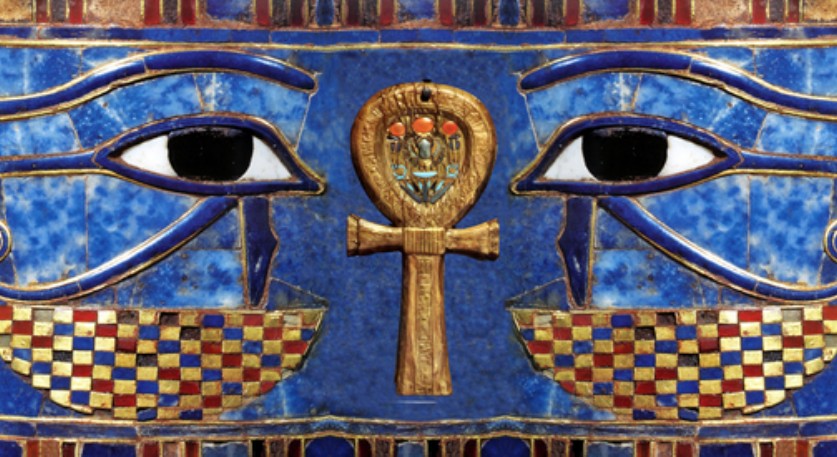
In Zero Limits, there is a particular passage that really draws my attention: eye contact. What I found is that the ability to maintain eye contact is strongly related to the state of human awareness. It is showed in a behavioral experiment where a group of participants must stand up face to face toward their own partners who are completely strangers, and see right through their partner’s eyes for certain period. Apparently, not all participants were able to maintain eye contact within the defined period. The instructor said that the ones who are filled with love won’t get any problem with eye contact to a total stranger. People who are not in peace, not having pure heart, lack of love, having prejudice and all sort of negative thinking (below level 200), will not stand to maintain eye contact even for short time.
The ones who failed to maintain eye contact were asked to release their negative energy using ho’oponopono technique by saying I love you repetitively, emitting universal love towards all beings including their stranger counterpart. Some even dropped tears unconsciously during the progress as they felt embarrassed or guilty for having negativity that contaminated them selves as pure beings. The ho’oponopono was successful. Eventually they were able to hold eye contact with their counterpart. This indicates that our eyes can’t hide what inside our mind is. Eyes can't lie. That's why we have to release our negative energy and fill ourself with love. Wise men say, the purpose of life for every being is to love and to be loved.
Additional comment:
In Western culture, when you are talking, you have to maintain eye contact. You can tell that a person is lying or telling the truth from his/her eyes. Yet, it is a different situation in Asian culture where looking at someone straight in their eyes can be considered rude or impolite.
As someone who was raised in Asian culture, I have to adapt and get myself used to with maintaining eye contact when speaking to someone. This is an important cross cultural learning especially for Asian students who study in Western countries. The Westerners often misunderstand them because they don’t maintain eye contact when they speak. Luckily, now I am used to with it. It does help me to see whether some one tells a lie or truth. Eyes speak, and never lie.
References:
Power vs. Force (David R. Hawkins)
Zero Limits (Joe Vitale & Ihaleakala Hew Len)
Pictures from http://kingtay.blogsome.com/
Posted by
Surya
at
11:59 PM
1 comments
Labels: human behaviour, literature, sharing opinion, spirituality
Sunday, December 13, 2009
Faith: accept and let go off
keywords: acceptance, power, force, grateful
Every time I had difficulty I always pray to get inspiration to solve the problem. Lately, it seemed that all answers to my pray have been provided through books. The books came out to me in various ways: through recommendation from my friends; through recommendation which came out from a stranger out of nowhere; through sudden intention to take a specific book when I browse in a bookstore.
When giving suggestion to my friends who have similar problematic situation that I had, very often I recommend them to read one particular book which, I think, seem to be appropriate to solve their problem. Yet, very often the book doesn’t suit them in term of its philosophy or overall content. And very often I heard most comment from them is that they can’t understand the main messages from the book even though they have read it over and over.
That is why I truly believe that things which are meant to be for us will surely come to us; on the contrary, things which are not meant to be, we won’t get it, we won’t understand it. For other persons with similar problem like what we had, maybe the universe has prepared another way to overcome their problem to make them able to draw the life lesson over such situation. We can help by sharing our experience in dealing with the same situation, but again, sometimes it may help to one person, sometimes it doesn’t work at all. One thing for sure, they will find the best way to overcome such situation. And the way out to the same problematic situation can be unique to every person.
Holding to that philosophy, now I can face everything with more acceptances. I realize when the thing I want can not be achieved, or the thing doesn’t work as I plan or aim for, I simply think that maybe it’s not meant to be for me at this time. Thus I have to work harder, I have to introspect and improve myself, and most importantly I have to let go off any negative thoughts for not meeting the expected target at this time. Maybe later, I deserve something better than before, something that’s meant to be best for me in the right time.
Previously, I realize that I used to apply force instead of power to get something. When we apply force, it has “tension of the opposites” (I borrow this term from Mitch Albom’s Tuesday with Morrie, as this is explained well about why we should use power instead of force). Imagine when you push a spring from its balance; you will get contraction and expansion. That is what happens when we use force. When I targeted on something with constant force, yes I can achieve the goal. But it takes most of my energy. Furthermore, it is also very exhausting to maintain what we get for using force.
Power on the other hand, encompasses everything. It doesn’t consume our energy, it recharges our energy instead. We can use power only when we are in line with our heart and in fully acceptance to the situation at any moment we live our lives. Initially, I felt a bit difficult to accept some situation in my daily basis. But when I can align with it, everything suddenly seems to unfold for me so easily. I am grateful to know this universal secret that we should work with power. Now even small things works perfectly for me as long as I’m in line with any situation in my present moment.
I still need to practice acceptance to any situation in my present moment. Sometimes, I still complain for unwanted situation I must face. Sometimes, I use force to deal with it. But then I realize, when something hectic happens, it alerts me to go in line again with my present moment, and not to use force to agitate the balance, the yin yang of the universe.
I thank all respective authors for all precious books.
References:
Power vs. Force (David R. Hawkins)
Tuesday with Morrie (Mitch Albom)
Posted by
Surya
at
11:16 PM
4
comments
Labels: reflection, sharing opinion, spirituality
How to control our emotion and be spiritually conscious?
Human beings might have advantage over other living beings in this world in the extent of having ability to be aware of their emotion, or “to be conscious” spiritually speaking. However, most human beings are not aware of this ability. Consequently, they don’t know how great the effect of this ability when it is being implemented.
Ideally, we have to be able to control our emotion and not the other way around; no matter it is driven by good or bad things in response to our surrounding environment. When it is stimulated due to good thing, we don’t lose control for not being overly excited. On the other hand, when our emotion is affected by bad thing, we don’t drag ourselves into deep despair.
The state of our emotion of being balance and not being affected by external factors is what in Buddhism is well known as Equanimity (Uppekha). It is “a spacious stillness of the mind, a radiant calm” (Salzberg, 1999), where we dwell in our peace and tranquility, emitting our highest aura and greatest inner power which can affect our surrounding environment in return (Hawkins, 2002).
Unfortunately, most people do not know how to apply this ability, and if they know, they don’t really put this into real daily practice. This fact has been confirmed in Hawkins’ investigation about the level of human consciousness where he found that most people in current modern days are below the consciousness threshold, i.e. below point 200 in logarithmic scale (the scale is between 0-1000, less than 200 is heading to chaotic state, 200 more is getting affirmative, 1000 is fully enlightened). Even in our daily life we can see that very often people are occupied with their own emotion. They become the slave of their own emotion. Consequently, a lot of people do erroneous acts, thoughts, talks, and other sort of irrational things.
The question is how to control our emotion; how to perform our innate ability to be aware of our emotion and be spiritually conscious? The answer is simply to pay more attention to observe our emotional states in every moment. Paying more attention requires concentration. So, just concentrate to pay attention to observe our emotional states(*). When we apply this once, we will experience a glimpse of tranquility; the awakening has just started. Practicing this every moment, our mind awareness becomes more and more conscious.
*) Practically, this is just the same as meditating. Meditating doesn't necessarily mean that you have to sit down like Buddha's posture closing your eyes and stay silent. Meditation can be done anywhere anytime as long as you concentrate to access the present moment, that is to pay attention to what you are presently doing.
Dwelling at conscious state offers several benefits. It does dissolve any emotional disturbance. Conscious people have acceptance to acknowledge that every single emotion influenced by external factors is only temporary, no matter good or bad. Since the power of being fully conscious is much greater than any state of world duality (good-bad, happy-sad, rich-poor, etc), it can also recharge our energy effectively and optimally. In contrast, drifting with our emotional flux consumes our energy a lot.
The pristine state of fully conscious beings is peacefulness. This is the last stage to achieve for every being in the universe. This is the highest state which is everlasting and unaffected by external environment. There is only peace inside. So, practice to observe your emotional states, be the witness on your emotional flux, and keep your heart at peace.
Posted by
Surya
at
2:52 PM
0
comments
Labels: sharing opinion, spirituality
Monday, August 17, 2009
Happy Independence Teeth
In the late age, our teeth can be tilted easily due to deteriorating support of the gum. In spite of that, teeth with straight formation might restrain them being tilted by giving strong support holding each other. For this reason, a lot of people with inadequate teeth formation wear brace to align their teeth.
The dentist said that anyone in any age is still possible to align their teeth using the brace providing the gum is still strong enough to support the alignment. The gum in the age of forties is still considered okay for such treatment. In some case, people in the age of fifties are still likely to do so.
Initially, the dentist normally asks you to have an X-ray photograph to check your jaw structure. Some people have a wide jaw structure causing their teeth formation very loose, or it could be the other way round where the narrow jaw causes the crooked or the overlapping teeth formation due to not enough space for the teeth to grow in line. The former case is easier to align simply by tightening the teeth using the brace. The later case requires more treatment which is to pull several teeth out or to file down some teeth into smaller size. Either way has the same purpose which is to give some space on the jaw enabling each tooth to align in the limited jaw structure.


How long a patient must wear the brace depends on how worse the initial teeth formation was. It may take about 1 to 1.5 years under the brace control to straighten either the loose or the overlapping teeth formation. Some case such as slanted-front teeth might take longer time to handle. For my case, I had worn the brace for about 16 months with a monthly brace control.
Does it hurt?
This is the most frequently asked question by someone regarding wearing teeth brace. Again, it is very relative to each person. Some said that they feel painful to chew for a week after the brace tightening hence losing appetite and weight consequently; some even said that they got fever. But for me, I normally had only two days to adapt after the brace being tightened. Those were the two days where I had to chew my meals extra slowly, but no fever at all, thank God.

Post Treatment
My dentist recommends me to wear teeth retainer after removing my brace. The retainer can prevent the recently straightened teeth from being deformed as the new formation is still unstable without the brace. The retainer can be easily removed any time, but it is recommended to wear it at most time. Normally, I just remove it during my meal, after that I wear it again and keep wearing it even when I sleep.

Thank my orthodontist for his professional treatment handling my teeth. Now, I can smile as wide as possible showing my tidy teeth to everyone
Posted by
Surya
at
11:04 PM
2
comments
Labels: health
Sunday, July 19, 2009
Tuban Eats
Traditional Tuban cuisine is characterized by the extremely hot chili flavor. I guess, the majority of local Tubanese loves to eat very spicy foods. To them, the more their mouths numb and their bodies sweat when eating spicy foods mean that the more they enjoy eating the food. Accordingly, some Indonesian food that is not supposed to be spicy, such as sayur bening (spinach soup) and sayur asam (mixed vegetable in sour soup), here they also put chilies within.In relation to my interest to explore traditional Tuban cuisines, I usually ask my local friends to accompany me on my food safari. Not to forget, I always bring stomach-relieving tablets, promag, to prevent discomfort due to excessive gastric acid, chewed before and after having the very spicy food.
Here, I recommend some popular place to eat traditional spicy foods in Tuban (I challenge if you dare to try). I put 1 star (mild) to 5 stars (extremely hot) just to indicate the ‘hot’ level of the food.
Pecel Pincuk Patung*
Description: A mixed vegetable (agati flower, cassava leaves, bean sprout, petai cina (a kind of bean), and basil with peanut sauce, served with rice.Place: Near Patung round about in Kalijogo St. The small warung (food stand) is in the left side if you come from the round about. ASK locals which one pecel pincuk stand is.
Open time: around 6 p.m. till mid night.
Other info: They also have empal (spice-flavored beef), fried eggs, chicken egg satay, perkedel (potato cake), rempeyek kacang (peanut chip), rempeyek teri (anchovy chip), salted duck egg, and soy bean milk.
Lontong Tahu Tri Dharma*
Description: Lontong (rice cake) and fried tofu with peanut sauce.
Place: Sutomo St. in the intersection to Ronggolawe St.
Open time: around 6:30 p.m. –
Wader MU**
Description: Fried fresh water fish with sambal (chili paste). I give 2 stars for the sambal, the fried fish itself is not spicy.Place: Warung Moeloeng. Go toward Semen Gresik mess, if you come from Tuban, the place is about 1 km after passing the mess in the left side. Phone number: +6281335304014.
Open time: morning till night around 10 p.m.
Lontong Kikil**
Description: Kikil soup served with lontong (rice cake). Kikil is the chewy part around the cartilage and foot part of the ox meat. The soup is rich in traditional spice of the typical East Javanese cooking.
Place: Near Patung round about in Kalijogo St. The small warung (food stand) is in the left side if you come from the round about. ASK locals which one Lontong Kikil stand is.
Open time: morning till afternoon.
Bechek Menthog (Duck Curry)**

Description: Duck curry and satay, served with steamed grounded corn or lontong (rice cake).Place: go to Medika Mulia hospital, pass it heading south for another 300 m, then ASK locals for more detail guidance. The place is on the right side, under pohon sawo (big sapodilla tree).
Open time: morning-afternoon.Other info: curry will be ready after 12 p.m. better come on time otherwise they run out of stock quickly due to so many customers.
Nasi Pasar Baru***
Description: Various Tuban cuisines including delicious seafood cooking, served with warm rice on a piece of teak leaf. Famous for all sorts of curry: catfish, sting ray, squid curry cooked with squid ink. Ask for the sambal (chili paste).Place: Pasar Baru (central market of Tuban), go in through eastern gate (main entrance), and you’ll notice a warung there.
Open time: 6 p.m. – 3 a.m.
Other info: Ask for the teak leaf on the plate.
Description: Grilled fish served with rice and fresh vegetables. The sambal (chili paste) is very tasty. The way they grill the fish is excellent, well cooked but not too dry making the taste of the grilled fish so marvelous. I give 3 stars for the sambal.Place: Tuban-Semarang Highway km. 4, the place is precisely on the beach.
Open time: morning-night.
Other info: They also serve other seafood; fried shrimp/squid are highly recommended. Arrange your time to come earlier as they take at least 45 minutes to bake and prepare the meal.
Nasi Jagung Jangkar****
Description: Fried eels/frogs/catfish coated with red chili sauce, served with steamed grounded corn wrapped in banana leaves. The sauce can be separated by request.
Place: go to Medika Mulia hospital, pass it heading south for another 1 km, then ASK locals for more detail guidance.
Open time: morning, normally by 12 p.m. the foods have been sold out.
Other info: Tuak, a traditional drink that contains alcohol is also served here. (See also my other posting about this place).
Belut (eel) Pak Min****
Description: Same dishes of spicy eels and steamed grounded corn, except the sauce is slightly different, a bit yellowy color due to turmeric use in the ingredient.
Place: go to Medika Mulia hospital, pass it heading south for couple miles until the road ends at a T-junction, turn right until you find the 1st alley on the left. Car is not accessible to this alley but the place is in walking distance (5 min walk). ASK locals for more detail guidance.
Open time: around 5 to 9 p.m.

Belut (eel) MU*****
Description: Eels in spicy thick sauce, served with steamed grounded corn. A half spoonful of the sauce is enough to burn your mouth! Suggestion: keep eating till you finish, a pause will make you suffer even more.
Place: go to Merak Urak (MU) market, from the T-junction, drive another 2 km to Suruan village, heading to Tuwiri Wetan until you find the first alley in the left side. ASK locals for more detail guidance.
Open time: morning-afternoon.
Rajungan Rhemason*****
Description: A very hot addictive crab curry.
Place: Manunggal Jaya in Manunggal St. in front of SMUN 3. Phone number: +6281357388219.
Open time: morning-night.
Other info: They also serve black squid curry, goat satay, and goat curry.

Posted by
Surya
at
1:08 PM
2
comments
Labels: favorite things, food-cooking-recipes
Soto Ayam Sleko
Lamongan soto ayam is good but not until I found this place called Warung Soto Sleko during my food safari in Tuban. This place offers a really great taste of soto ayam, the best I’ve ever had so far. I got information about this place from local Tuban people. From them I can tell that this place is pretty well-known among the old generation of Tubanese. They said that this place has been popular since long time ago. However, not so many young Tubanese know about the place.The owner of this small warung is a 72 year old lady called Ibu Narto. In her late age, she is still active to run her business selling soto ayam. She uses a small patch in the front part of her house with a nice little garden in one side. She told me that every morning she has to go to the market to buy free-range organic chickens, then prepare the ingredient based on her excellent recipe and finish her cooking by mid noon. The place previously opened from 5 to 9 p.m. but now opens from lunch time to 9 p.m. everyday except on Sunday for the church.
Ibu Narto told me that in the beginning she ran her business, she didn’t utilize the front part of the house for the warung. When she had finished the cooking, her late husband would bring the big pot full of soto to the nearest market. They opened a stand there because there were more customers around the market than around the house since the area around her house was not convenient for access. But after couple years passed, Tuban city council had fixed the area up and facilitated it with street lights. Since then, they opened this nice comfortable little warung at home. Her loyal customers still come to the current place in Pahlawan St. no. 7, just in front of a
monument in the T-junction. Her customers are not only from down town Tuban, but also from Jakarta, Surabaya, and other areas.
Apart from serving soto ayam, Warung Soto Sleko also serves fried chicken and sambal lalapan (fresh vegetables and chili paste). Both soto ayam and the fried chicken are from free-range organic chickens therefore the taste are very delicious. Soto ayam here can be served with rice or lontong (rice cake). Normally the rice is poured with the hot soto within one bowl, but you can ask to separate the rice from the soup as what I usually do. Before, this place also offered grilled chicken, but they have withdrawn it from the menu. The reason is simply due to ease to prepare soto ayam and fried chicken only, said Bu Narto. So, I strongly recommend you, try this marvelous soto ayam and the fried chicken. Bon Appetit ;)

Price info:
A bowl of soto ayam + rice: IDR Rp. 7,500.00
A piece of fried chicken: IDR Rp. 10,000.00
A glass of tea: IDR Rp. 1,000.00
Posted by
Surya
at
12:12 PM
0
comments
Labels: favorite things, food-cooking-recipes
Monday, July 13, 2009
Batik Gedog, a nice souvenir from Tuban

Batik Gedog, one of the Indonesian traditional hand-painted batik, is a well-preserved cultural heritage which is originally from Tuban, East Java. The artistic feature of this batik is characterized by its coloration. The base color of the fabric could be any color. Red, blue, green, brown, black and white are common among other basic colors. The conspicuous pattern of this batik makes it unique relatively to other Indonesian batik. The patterns are mostly inspired from nature for example flowers, leaves, marble, insects, lizards, peacocks, and many other types of birds.
Batik Gedog can be worn as informal or formal clothing. Pajama, casual T-shirt, short- or long-sleeves shirt, and formal gown are common clothing made from this batik. The highest to lowest quality of the fabric used for painting Batik Gedog are silk, juantiu, and primis (local term) respectively. Cotton is the most suitable fabric to make Gedog T-shirts. Any fabric other than those types is less appropriate to apply for batik painting.
The center of Batik Gedog making can be found in several villages in Kerek, the western suburb of Tuban. A village called Margorejo, about 30 km from down town Tuban, is a very popular Gedog making center where you can see the process of drawing Batik Gedog by most female local workers.It is very interesting to see those skillful hands of the ladies drawing particular pattern on the fabric. They use a wax-based ink to make permanent color on the pattern so it can hardly bleach for long.

The only thing you should be aware of when you wash a new clothing of Batik Gedog for the first time is that you have to separate it from other clothes as the remaining ink will dissolve and can contaminate other clothes. The second wash will be perfectly okay to mix up.
Posted by
Surya
at
9:35 PM
1 comments
Labels: favorite things, literature, trips and travelling